
A myth · Methods and Tactics
The Free for All Fight
The popular picture: The moment two ancient or medieval armies meet, battle lines dissolve into chaotic brawls where warriors best one another in sequential one-on-one duels
How It Appears on Screen
The day of battle has arrived. Opposing armies have carefully positioned themselves at odds and send forward their front lines. At the forefront, two opposing lines of infantry charge, collide, and then merge. The lines disappear as friendly and enemy forces move past one another to pick off individual opposing warriors. After enough of the enemy has been defeated, one side will remain standing amidst the carnage, celebrating their victory while the enemy stragglers run away.
Titles That Repeat the Myth 2

Gladiator 2000
Though the Romans in the opening battle begin the fight against the Germanic tribesmen in good order, once the fighting kicks off, their formation quickly dissolves, not to mention that the tribesmen hold no formation of their own.
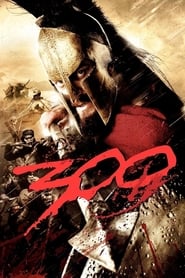
300 2006
The initial Persian wave sees the Spartans adopt a rigid phalanx formation to defend the pass at Thermopylae which quickly disappears once the Spartans choose to advance.
Titles That Reject the Myth 1

Rome 2005
Though how Rome depicts the precise matter of Roman infantry rotation (via whistle commands and quickly forming paths away from the shield wall) is up for historical debate, the organization of the Roman army and the use of proper military formation is on full display in this episode.
Why Itʼs Wrong
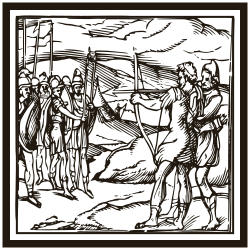
Formations existed because they worked. The Greek phalanx, the Roman legion's lines of maniples, medieval shield walls, and pike and shot squares of the sixteenth century all relied on the same principles: soldiers who grouped together could protect one another, project greater force than they could alone, and better maintain battlefield discipline. Formation provided protection against the shock of cavalry charges as well as reassurance to morale that the infantryman was well supported by his fellow soldiers, also a direct reminder of who they would be hurting should they try to flee.
The specifics of those formations varied highly from society to society and from time period to time period. In fact, many details of how ancient warfare was conducted such as at what distance fighting broke out between opposing armies and how exactly different units positioned themselves relative to one another during a battle are often either unknown to us or debated by historians piecing together what they can from sparse sources. That being said, the existence and use of formations like the phalanx on the battlefield and their military effectiveness being predicated on the formation being able to hold together as a cohesive whole is not in doubt[1]The cohesiveness of infantry formations like the phalanx was central to its success. This is why attacks such as missile fire from light troops or shock charges from cavalry were often focused on trying to dissolve this cohesion.Fernando Echeverría Rey, “Taktikè Technè" — The Neglected Element in Classical 'Hoplite' Battles,” Ancient Society 41 (2011): 45-82..
Besides boons to battlefield performance, formations, especially in the pre-modern period, could also take on social hierarchical dimensions as well. Not all soldiers were drawn from the same ranks of society nor were all created equal. Accordingly, a cavalry formation, for instance, might represent the collection of the sons of a state's nobility. A composite army made up of many vassals, mercenaries, or other parties bound to their respective lords, could also derive formations from the personal ties of groups of soldiers to their leaders. For instance, 10th century Viking bands of a few dozen men relying on their chieftains to distribute loot to them after service to a higher authority[2]Viking armies of the 10th and 11th centuries were composite forces from a variety of sources, including men personally loyal to and maintained by the king, hosts loyal to familial or social relations of the king, and lesser chieftains throwing in their forces for a portion of battle loot after the fighting.Gareth Williams, Viking Warrior Versus Anglo-Saxon Warrior: England 865-1066 (Osprey Publishing, 2017)..
Where It Might Have Come From
The idea of the brave warrior single-handedly fighting a one man war while surrounded by the enemy is one that has its roots in the storytelling of battle generally, as well as being a more recent cinematic invention. The epic poetry of Ancient Greece had its conception of the Aristeia or distinguishing moment for a great warrior on the battlefield, though this was more often left to the domain of champions than act as a reflection of actual ancient combat.[3]The ancient Greek custom of Aristeia, or the single-handed achivements done by great warriors on the battlefield, was a feature of epic poetry to distinguish the fearsomeness of champions, not a reflection of actual warfare.F. E. Adcock, The Greek and Macedonian Art of War (University of California Press, 1957). Similarly, where the camera needs a scene to distinguish its champion as a cut above the rest, it often defers to this trope.
Sources
- The cohesiveness of infantry formations like the phalanx was central to its success. This is why attacks such as missile fire from light troops or shock charges from cavalry were often focused on trying to dissolve this cohesion.Fernando Echeverría Rey, “Taktikè Technè" — The Neglected Element in Classical 'Hoplite' Battles,” Ancient Society 41 (2011): 45-82.↩
- Viking armies of the 10th and 11th centuries were composite forces from a variety of sources, including men personally loyal to and maintained by the king, hosts loyal to familial or social relations of the king, and lesser chieftains throwing in their forces for a portion of battle loot after the fighting.Gareth Williams, Viking Warrior Versus Anglo-Saxon Warrior: England 865-1066 (Osprey Publishing, 2017).↩
- The ancient Greek custom of Aristeia, or the single-handed achivements done by great warriors on the battlefield, was a feature of epic poetry to distinguish the fearsomeness of champions, not a reflection of actual warfare.F. E. Adcock, The Greek and Macedonian Art of War (University of California Press, 1957).↩
Cite this myth
Shelfmark Fabula ILast revised .