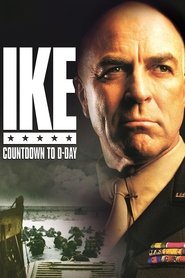
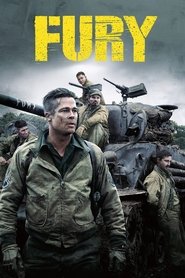
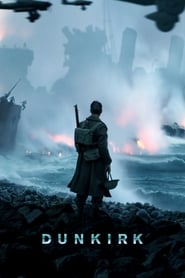
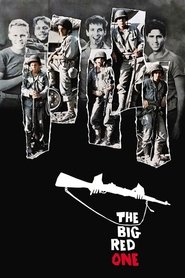
Films & Shows Set during Western Front (World War II)
Runs from1939–19456 years wide
ShelfmarkLiber LXXVII
World Wars Era
The war in Western Europe: the German conquest of the Low Countries and France in 1940, and the Allied return from the Normandy landings of June 1944 to Germany’s surrender in May 1945.
12 titles · in the order the archive depicts them. A series counts once, regardless of however many of its episodes carry the tag.
The Chronicle
The events and themes the archive follows through Western Front (World War II), in the order they happened, each with the titles that depict it. Press a name to read about it in the threads below.
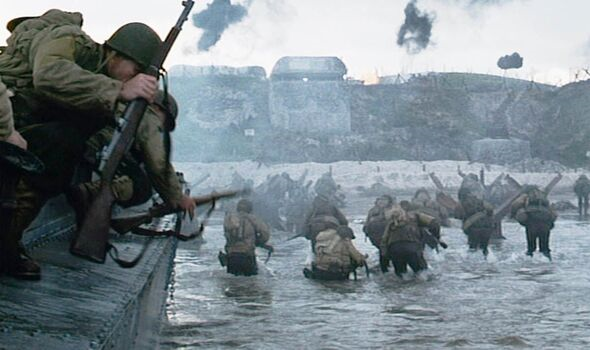
The largest invasion by sea in human history, D-Day is the popularized name for Operation Neptune, or the Allied invasion of the German-occupied Normandy coast in June 1944.
Every title set during Western Front (World War II), by the decade it came out. A series is placed on the chart by its first season and counts as one title entity.
FilmsSeriesAt the archive’s paceeach bar is the titles released that decade
The median title about Western Front (World War II) came out in 2006; the median across the rest of the archive, in 2004, so this period’s titles run 2 years later.
The gold dashes are how many of this period’s 12 titles each decade would hold if they had been released at the same pace as the other 279 dated titles in the archive. That measures the archive’s own collecting, not the world’s film output, and at these sizes one title moves a bar by a whole step.
Cast of Characters
The historical people the archive’s titles put on screen in this period, grouped by what they are known for. The number is how many titles set here they appear in.
A thread follows one event or historical theme across the archive, wherever and whenever it appears. Pick a tab to read one; they are in the order they are filed on the timeline. Pulling a thread opens up a narrowed timeline view filtered to every year that thread touches.
The surrounding and subsequent evacuation of the British Expeditionary Force and allied forces from the town of Dunkirk in Northern France in 1940. The evacuation cemented itself in the popular imagination with the mass deployment of British civilian craft to help rescue trapped soldiers as the German forces surrounding them closed their encirclement.
The systematic extermination of Jewish people across Europe as perpetuated by Nazi Germany and its allies during World War II. The genocide was conducted in various stages and by various means over the course of the war, though none more identifiable with the atrocity than the death camps such as Auschwitz-Birkenau, Belzec, Treblinka, and Sobibor. In all, some six million Jews would perish from 1941-1945.
The largest invasion by sea in human history, D-Day is the popularized name for Operation Neptune, or the Allied invasion of the German-occupied Normandy coast in June 1944. After months of planning, experience gained from previous invasions in Italy and in the Pacific, and extensive preparation efforts, the Allies were successfully able to secure a beachhead from which they were able to push out towards the rest of France, liberating Paris by August 1944 and greatly accelerating the end of the Second World War in Europe.
Every place the archive’s titles set in this period name, with each one nested under the larger place it sits inside where that place is here too. The number is how many titles set here name it.
No title set here has been given a saltiness score yet. That is unrated, which is not the same as accurate.
Archive Density
26%12 of the 46 titles the archive sets between 1939 and 1945 carry the Western Front (World War II) tag.
This measure can help illustrate cinematic hotspots within a time period by comparing which years of the overarching, actual historical time period are backed up by a cinematic release.
Share of the 32 genre taggings across 12 titles set in this period. A title filed under three genres is in three of these slices, so this is a share of taggings rather than of titles.
Films only. Co-directors are counted individually, so a director’s solo work and their collaborations are grouped together. Average saltiness ignores any title still unsalted.
Series only, counted once each however many episodes carry the period. Average saltiness ignores any title still unsalted.
Also on the Timeline
Part of and part of it are declared by the archive: one period counted as belonging to another, whatever their dates. Periods overlap freely so concurrent means the two spans share years, and the shared stretch is named. Bounded means it lies wholly inside this one, beginning and ending more than 10 years within its boundaries. Before and after are the nearest periods lying outside this one, with the gap in years shown instead. A shared thread is what the two have in common besides the calendar, and a period lying wholly outside this one can still share one.
Periods before, during, inside and after Western Front (World War II), with their year ranges, the years they share with it, the threads they share with it, and how many titles the archive holds of each.